Skip to content
Construction supervisors reviewing site requirements before work begins

Demolition Guide

Adelaide Council Demolition Permits

A practical guide to demolition approvals, council coordination, site documentation, and planning friction points in South Australia.

Resource guide

Adelaide Council Demolition Permits

Demolition permits can feel confusing because the requirements sit across planning approval, council expectations, service disconnections, heritage constraints, asbestos risk, public safety, and environmental controls. The right pathway depends on the property, the structure, the surrounding area, and what will happen on the site after demolition.

This guide explains the practical steps owners, builders, and developers should understand before demolishing in South Australia. It is written to help you ask better questions, prepare stronger documentation, and avoid the common mistakes that delay House Demolition, commercial demolition, excavation, asbestos removal, and waste disposal work.

Construction workers in protective gear confirming site preparation steps
Approval meeting
Worker walking through an industrial site while checking access and machinery

01

Why approval should be checked first

In South Australia, demolition may need development approval or other council confirmation before work starts. The answer is not the same for every site. A small outbuilding, a full house demolition, a commercial strip-out, a heritage building, and a CBD structure near public assets can all trigger different levels of review.

The safest approach is to confirm the approval pathway before booking machinery. PlanSA, the relevant council, and project consultants can help identify whether planning consent, building consent, encroachment permits, traffic permits, or heritage considerations apply.

Workers on scaffold managing safety controls for an active build

02

What councils are usually trying to understand

Councils are not only asking whether a building will be removed. They also need confidence that the site can be controlled safely and that public assets, neighbours, streets, stormwater, trees, and environmental conditions will be protected. A clear demolition scope makes that assessment easier.

Typical information can include a site plan, structures to be removed and retained, demolition methodology, asbestos status, waste disposal approach, traffic or pedestrian impacts, public asset protection, erosion control, and any work affecting footpaths, roads, kerbs, crossovers, or neighbouring properties.

Urban demolition site showing machinery, rubble, and public interface controls

03

Development approval and demolition scope

A demolition approval should match the real scope. If the project includes the dwelling, garage, slab, pool, retaining structures, significant hardstand, or partial wall removal, the documentation should make that clear. Vague scopes create problems when the contractor arrives and discovers the approval does not reflect the work expected.

For knockdown rebuilds, owners should also consider what the builder needs after demolition. If the approval and demolition scope only cover the house but the builder expects slab removal, footing removal, tree protection, or site trimming, the programme can slow down. Those scope decisions also affect the variables explained in our House Demolition Pricing Guide .

Excavator staged on a construction site after planning and approval checks

04

Heritage and character areas

Heritage or character overlays can significantly change the approval pathway. In some cases, total demolition may need closer assessment because the building contributes to a historic area or streetscape. Even partial demolition can be sensitive if retained elements, facades, verandahs, boundary walls, or neighbouring heritage fabric are affected.

Before assuming a property can be demolished, check the planning layers and speak with the relevant professionals. A premium demolition plan should identify what can be removed, what must be retained, and how retained elements will be protected during work.

Demolition Guide 8 min read

01 / Demolition Guide

Why permits come first

Demolition is treated as a regulated development activity in South Australia. Before work starts, the project may need Development Approval, supporting documentation, neighbour considerations, traffic controls, and environmental controls.

The approval pathway depends on the property, structure type, council area, heritage status, trees, access, and whether public roads or footpaths will be affected. Early planning with Adelaide Demolition keeps the paperwork, make-safe sequence, and site handover moving as one controlled process.

Worker walking through an industrial site while checking access and machinery
Cost planning
Workers on scaffold managing safety controls for an active build
Administration

02 / Demolition Guide

Common documentation

Most demolition approvals need enough detail for council and project stakeholders to understand what is being removed, how the site will be controlled, and how risk will be managed. For residential projects, the documentation should match the final scope of the House Demolition service.

  • Site plan showing structures to be removed and retained
  • Hazardous materials or asbestos assessment
  • Demolition method statement and waste approach
  • Evidence of insurance and traffic or pedestrian controls

03 / Demolition Guide

CBD and constrained sites

Projects near footpaths, laneways, neighbouring buildings, or public assets can require extra coordination. Hoarding, scaffolding, road occupancy, crane movements, and pedestrian diversions should be planned early.
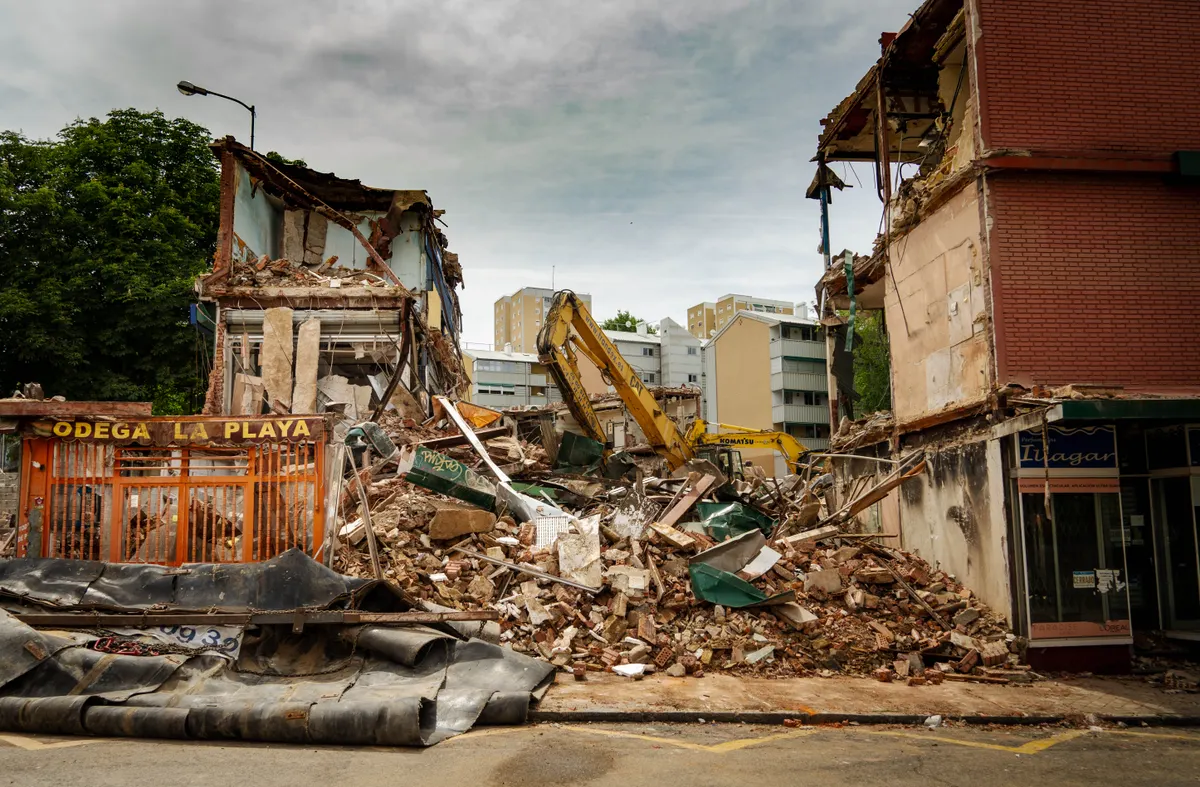
Urban demolition site showing machinery, rubble, and public interface controls
City constraints
Excavator staged on a construction site after planning and approval checks
Approval pathway

04 / Demolition Guide

How to avoid programme delays

The fastest path is rarely the cheapest shortcut. Start with a clear site inspection, identify overlays, confirm asbestos risk, prepare complete documentation, and allow time for council responses before locking in machinery.

Premium project delivery

Need this handled before machinery arrives?

Permits, asbestos, disposal, access, and handover are easier when they are planned as one controlled demolition system.

FAQ

Straight answers

Can not find the answer you need? Call the team and we will talk through the site.

Do all Adelaide demolition projects need council approval? +

Not every project follows the same pathway. Approval depends on the structure, council area, heritage status, public asset impacts, and scope. Confirm before work starts.

Can I demolish while waiting for approval? +

No. Demolition should wait until the correct approvals, service disconnections, asbestos controls, and site safety measures are in place.

What documents help a demolition approval? +

Helpful documents can include site plans, scope, demolition method, asbestos information, waste plan, traffic controls, insurance evidence, and public asset protection details.

Who checks heritage restrictions? +

Owners, designers, planning consultants, and councils can help confirm whether heritage or character area rules affect demolition. This should be checked early.

Can permit planning delay the demolition start date? +

Yes. Heritage checks, public asset permits, traffic controls, asbestos information, and incomplete documents can delay work, so they should be reviewed before machinery is booked.