Identify
Review likely asbestos locations and arrange competent inspection.
Licensed hazardous materials control
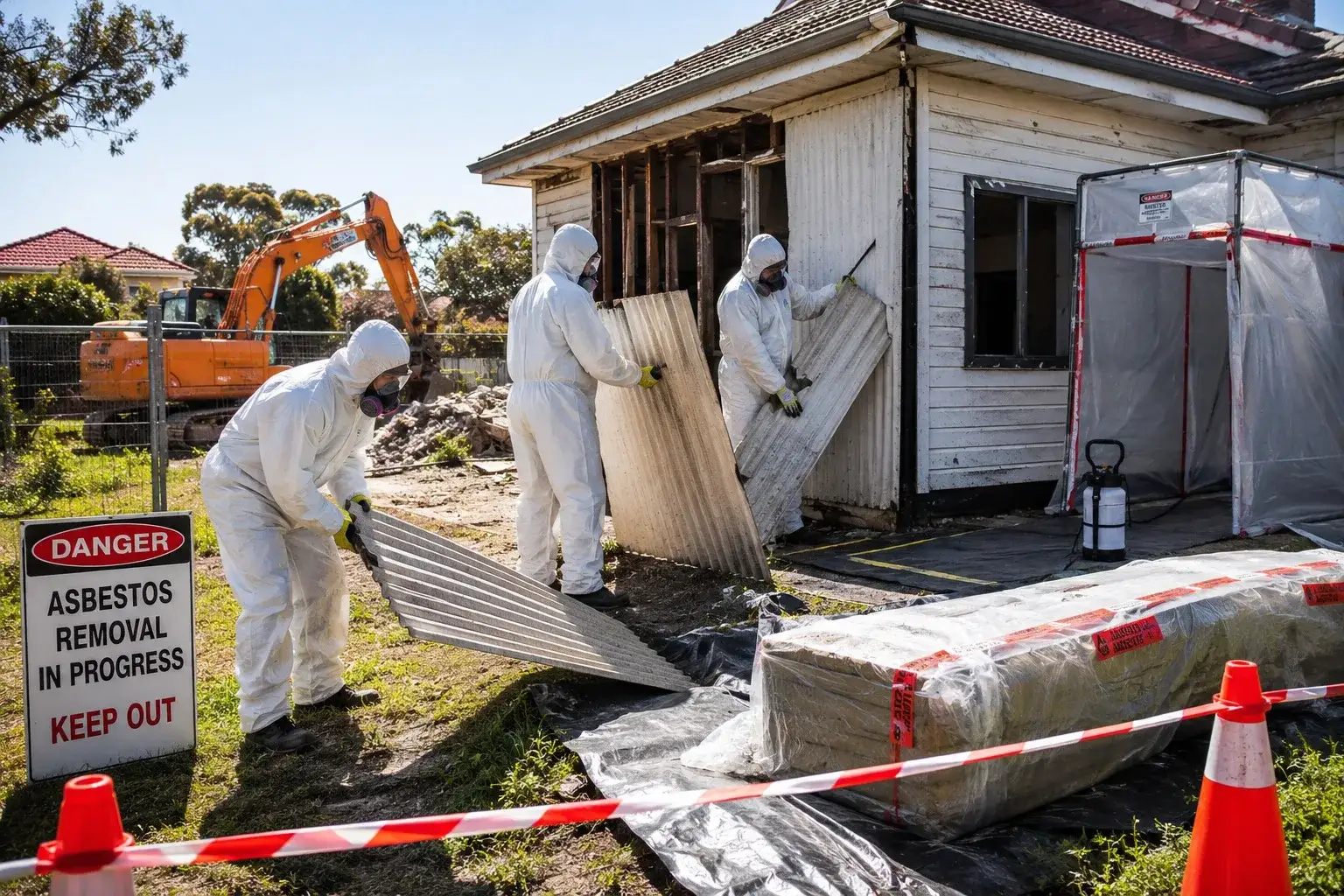
Asbestos removal and disposal handled with strict containment, licensed transport, air monitoring coordination, and clear documentation.
Service guide
Asbestos removal and disposal must be treated as a controlled risk process. In Adelaide homes, commercial buildings, schools, sheds, industrial sites, and older service areas, asbestos-containing materials can be hidden behind ordinary finishes. Once disturbed, the health, legal, and project consequences can be serious.
Adelaide Demolition helps clients plan asbestos removal and disposal before demolition, renovation, strip-out, excavation, or waste clearance begins. We focus on identification, licensed removal pathways, SafeWork SA requirements, air monitoring coordination, sealed transport, approved disposal, and clean documentation for follow-on trades. Homeowners can also review our asbestos removal in homes guide before disturbing older materials.
Successfully submitted.
Please expect 1–2 days to get a response, if not, feel free to submit your quote request again.
01
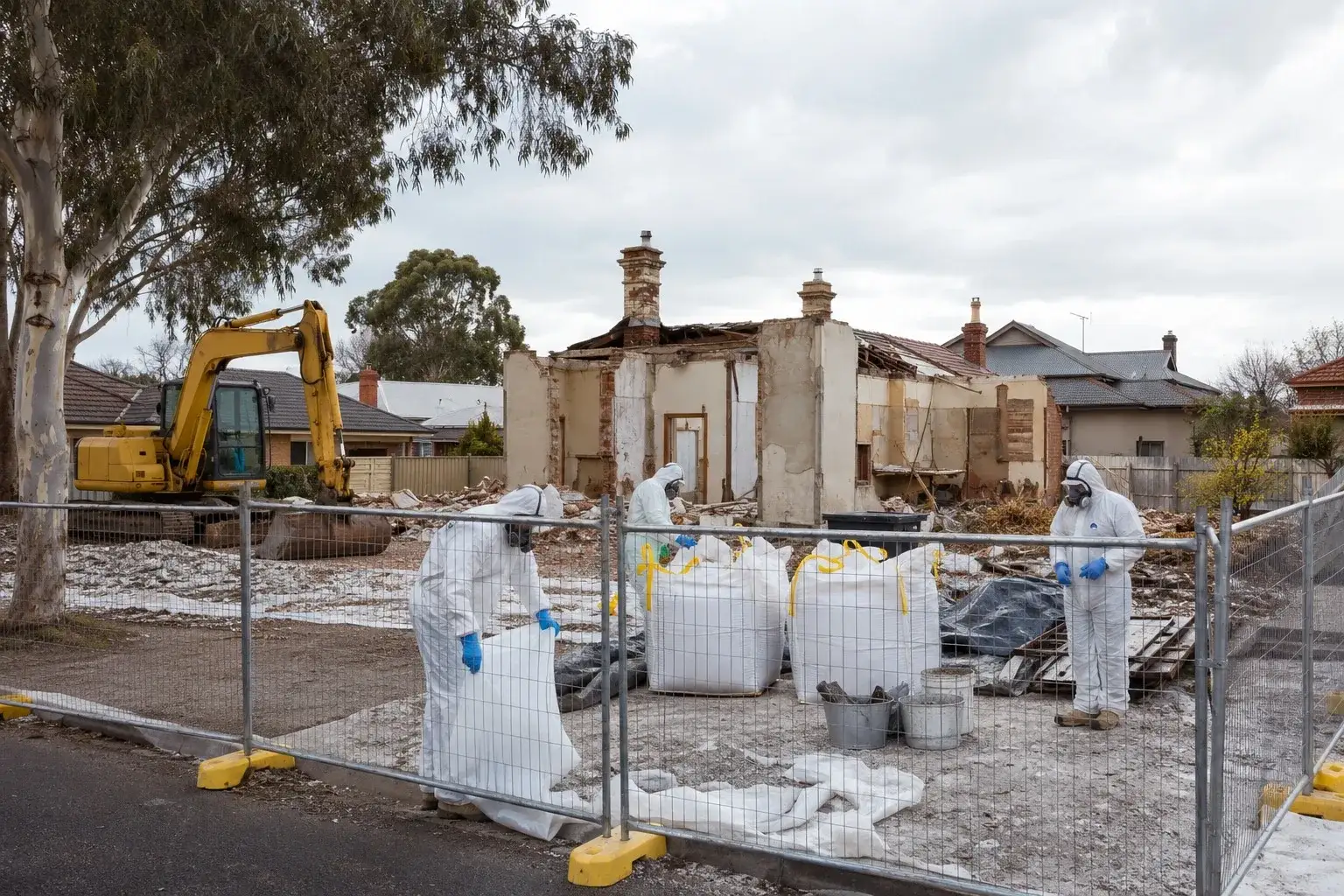
Asbestos becomes dangerous when fibres can be released into the air. Cutting, breaking, drilling, grinding, pressure washing, uncontrolled demolition, or careless waste handling can turn a manageable material into a contaminated site. That is why asbestos planning belongs at the start of the demolition programme, not after machinery has already disturbed the building.
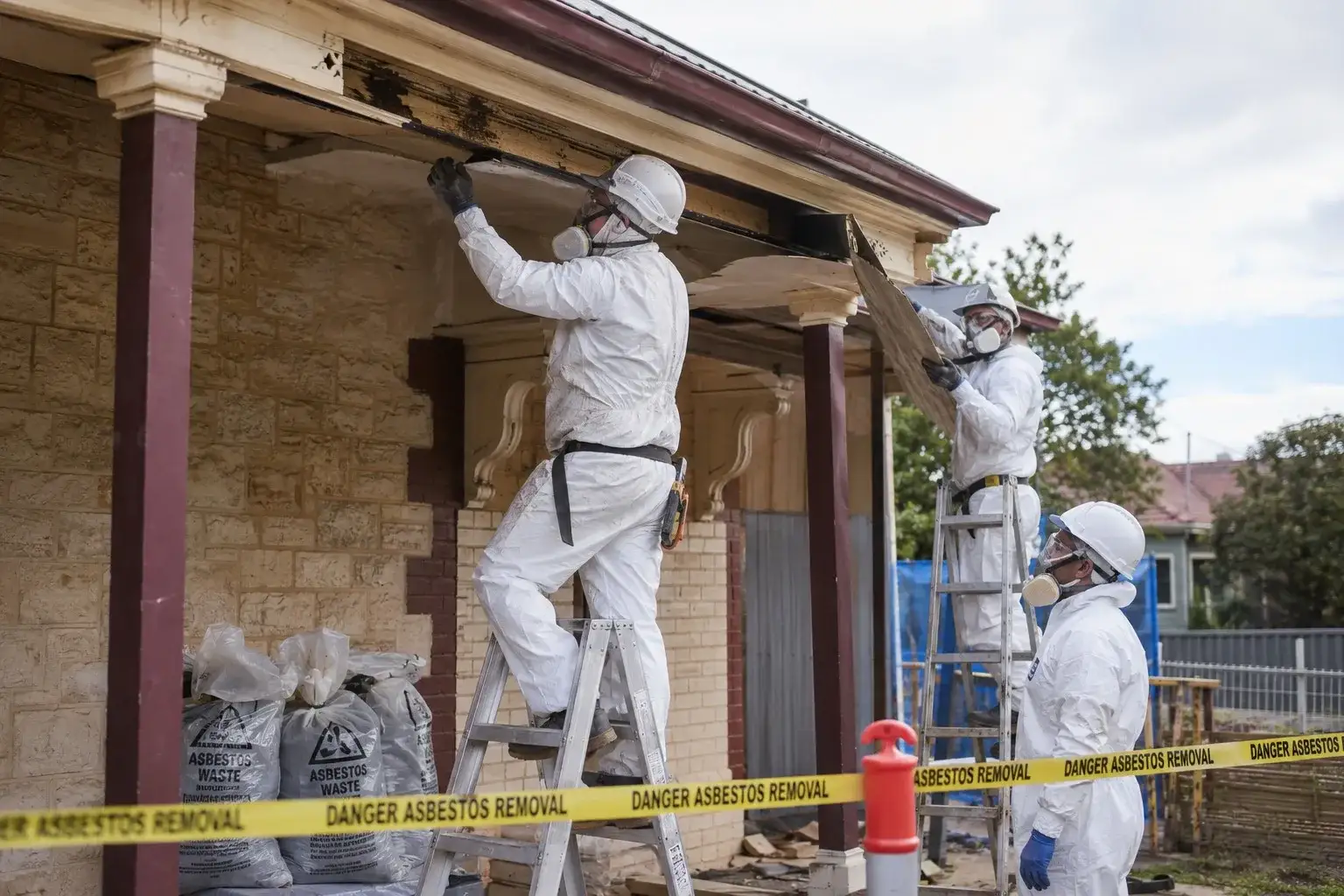
Older Adelaide properties can contain asbestos in eaves, cladding, bathroom linings, vinyl flooring, roofing, fences, sheds, service ducts, pipe lagging, switchboard areas, plant rooms, and fire-rated materials. A professional process protects workers, neighbours, homeowners, tenants, and the next contractor.
02
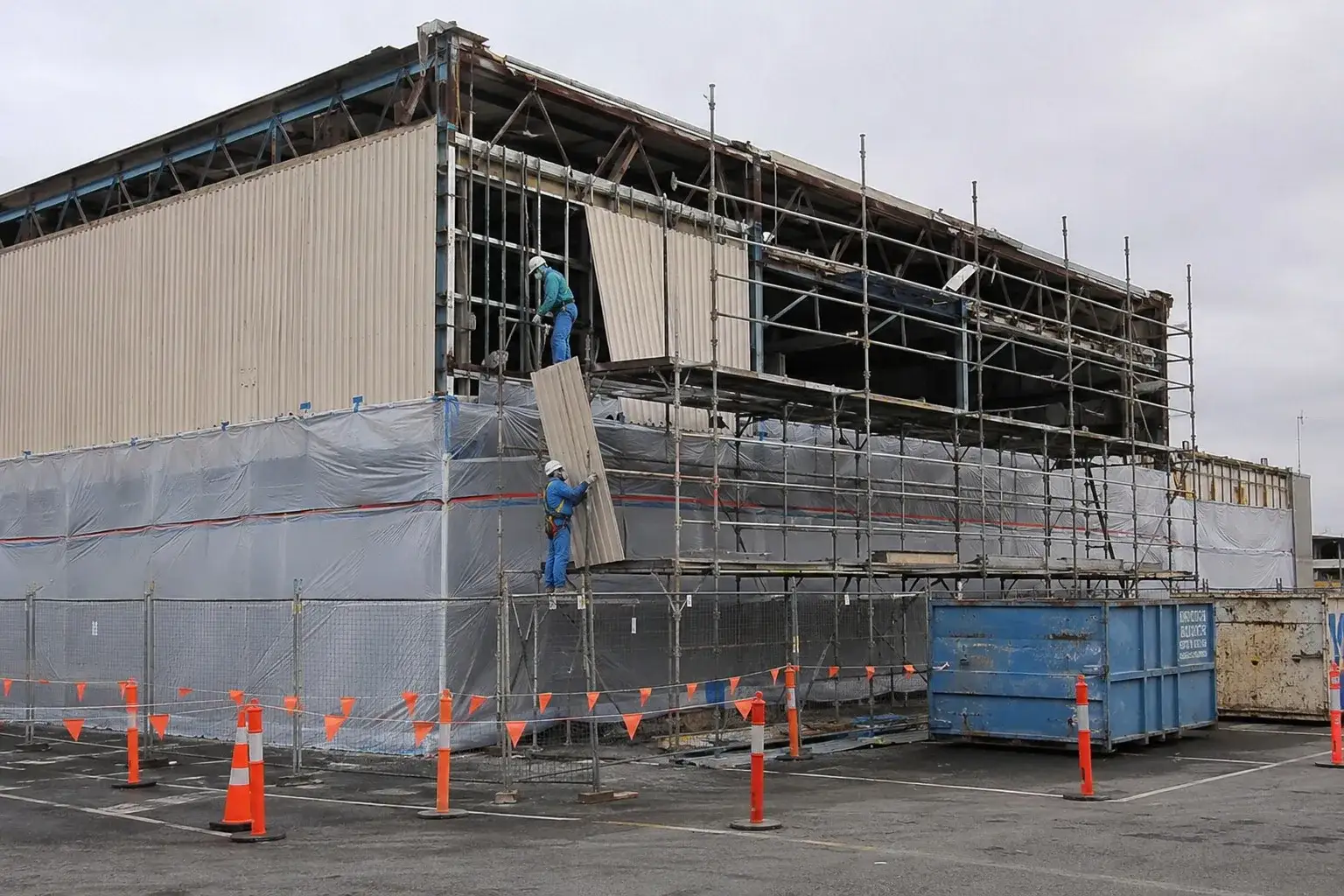
South Australia recognises different asbestos removal licence classes. Class A asbestos removalists can remove friable asbestos and non-friable asbestos. Class B asbestos removalists can remove non-friable asbestos. Depending on the scope, notification to SafeWork SA, air monitoring, clearance inspection, and an independent licensed asbestos assessor may be required before wider house demolition work proceeds.
The safest approach is to confirm the asbestos type, quantity, location, and disturbance risk before work begins. We help clients understand which pathway is appropriate and where a licensed asbestos removalist, hygienist, assessor, or consultant should be engaged.
03
Visual identification is not reliable enough for demolition planning. If a material may contain asbestos, sampling and laboratory testing by a competent person provides a clearer basis for decisions. The inspection should cover obvious materials and hidden areas likely to be disturbed by demolition, renovation, excavation, or service disconnection.
A strong inspection brief reduces assumptions. It can identify whether materials should remain undisturbed, be removed before demolition, or be managed through specific controls. This protects the programme and reduces the risk of late discoveries that stop work.
04
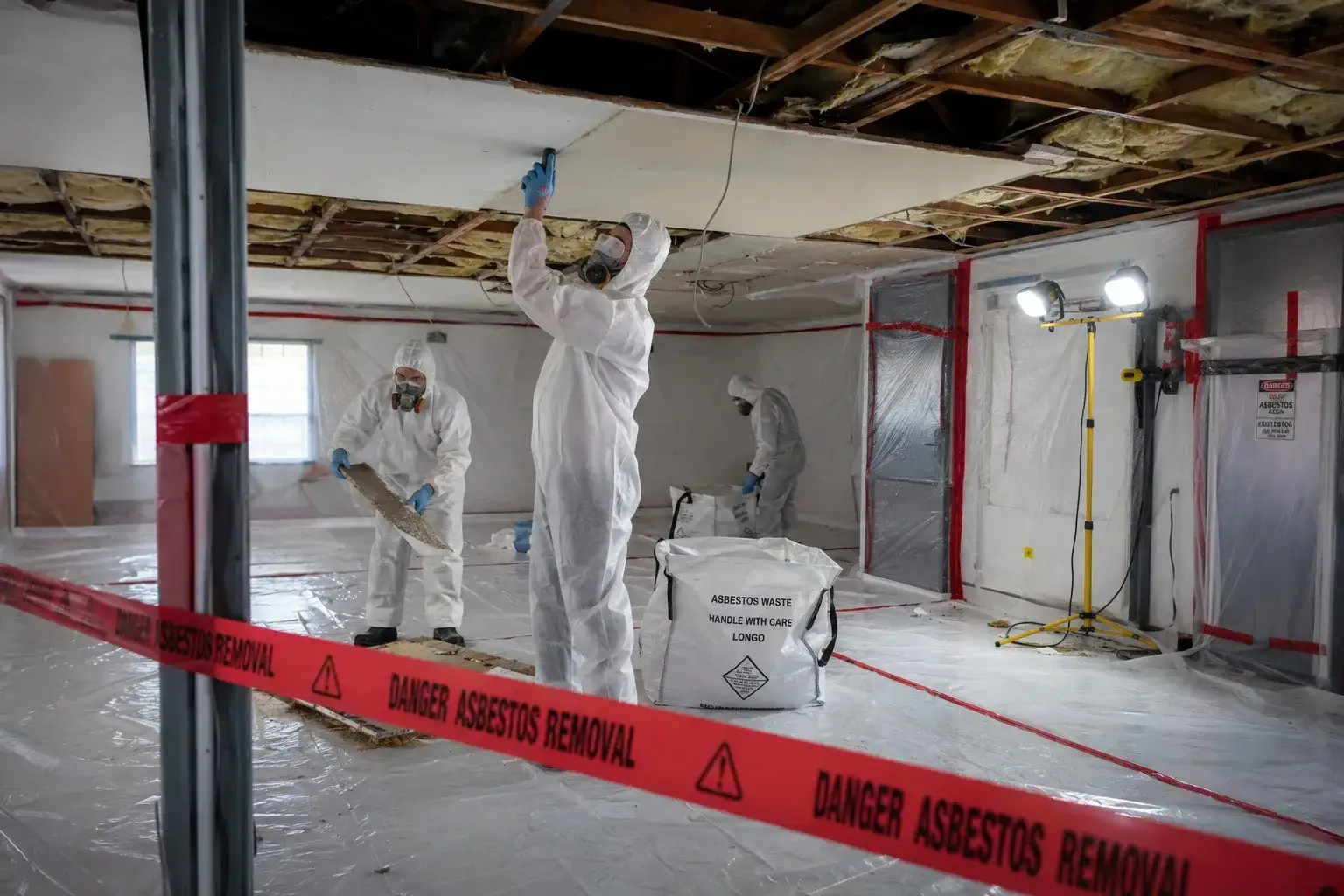
Asbestos removal is not only about taking material away. It is about creating a controlled work area. This can include exclusion zones, signage, wet methods, protective equipment, negative pressure enclosures for friable work, waste routes, decontamination arrangements, and communication with people affected by the work.
The level of control depends on the material and project environment. A residential eave removal has different needs from a commercial plant room or friable pipe lagging removal, but every asbestos scope should prevent uncontrolled fibre release and cross-contamination.
Older Adelaide homes, schools, warehouses, offices, and industrial sites can contain asbestos in linings, eaves, roofs, flooring, ducts, plant rooms, and concealed voids. The safest project is the one that identifies risk before it is disturbed.
We structure asbestos work around competent inspection, licensed removal methodology, controlled handling, and traceable disposal.
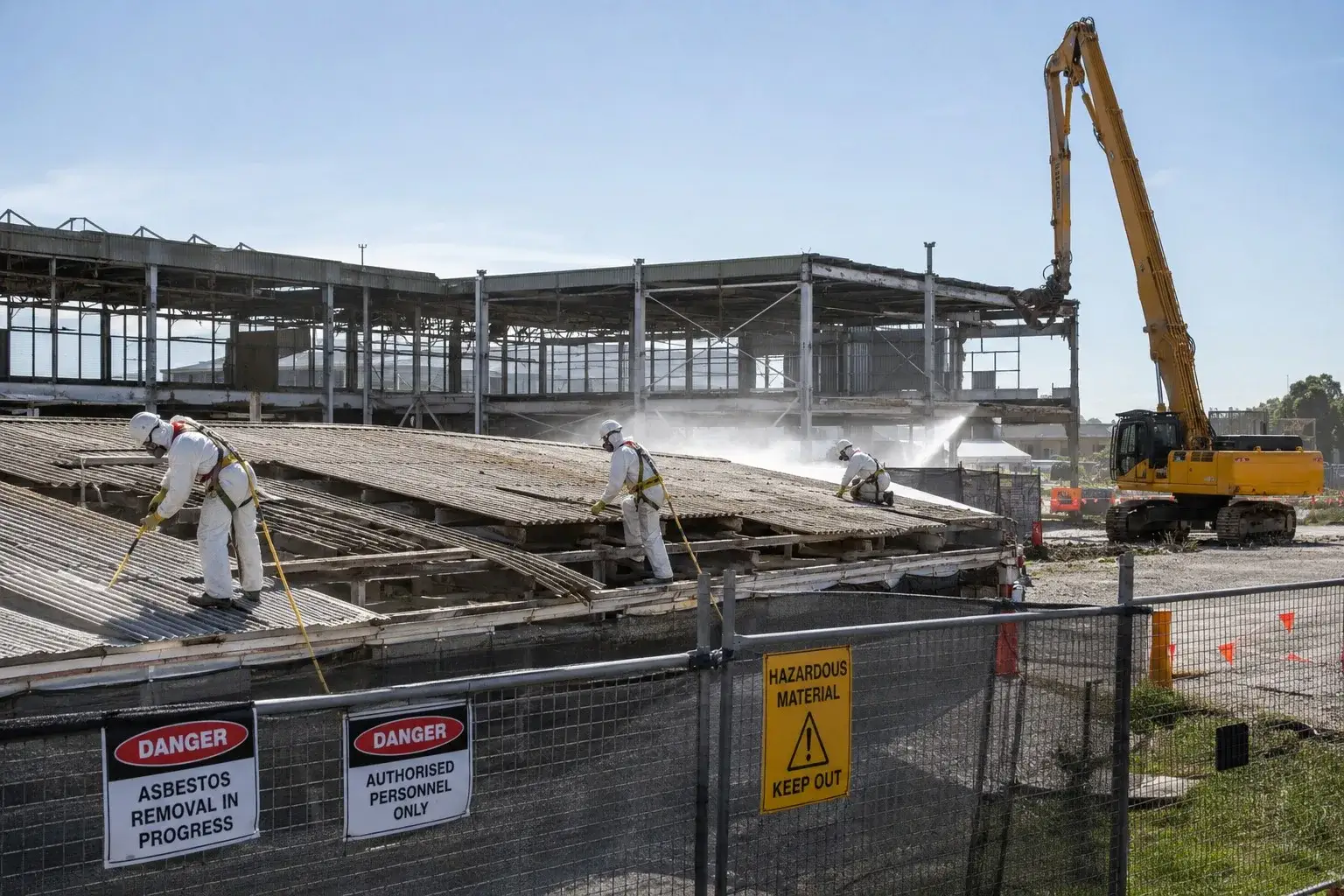
The removal area is isolated, access is controlled, materials are removed according to licence class requirements, and waste is sealed, labelled, transported, and delivered to an approved facility.
Incorrect asbestos handling can contaminate a site, a vehicle, neighbouring property, and future trades. Professional removal protects the project, the community, and the programme.
Regulated workflow
Every movement is staged around access, neighbours, public interfaces, material recovery, and the handover condition the next trade needs.
Service proof
Class A/B
Licence planning
Tracked
Waste handling
Zero shortcuts
Project posture
Review likely asbestos locations and arrange competent inspection.
Define removal class, controls, notifications, and access restrictions.
Set up exclusion, signage, wet methods, PPE, and waste paths.
Seal, label, transport, and dispose through approved channels.
Coordinate clearance evidence before follow-on demolition proceeds.
Premium project delivery
Book a site inspection and receive a clear demolition plan, transparent scope, and practical next steps.
FAQ
Can not find the answer you need? Call the team and we will talk through the site.
No. Known asbestos-containing materials should be removed through the correct licensed pathway before structural demolition begins.
Class A removalists can remove friable and non-friable asbestos. Class B removalists can remove non-friable asbestos. The required pathway depends on the material and scope.
Yes. Asbestos waste must be sealed, labelled, transported, and disposed of according to applicable requirements and facility acceptance rules.
Many older homes can contain asbestos-containing materials in roofing, eaves, wall linings, wet areas, vinyl flooring, sheds, fences, and service spaces.
Where the scope requires it, disposal records, clearance evidence, and supporting documentation can be coordinated so the site is ready for follow-on work.